Showcase & Discover Creative Work Sign Up For Free
Hiring Talent? Post a Job

Showcase & Discover Creative Work

Want to Learn More?
  • "Dustland" is a cinematic sounding improv that I recorded with the Fence Bass.
    This instrument has a rough and edgy sound since
    it's all made of metal, so I imagined a piece that could work in a modern Western film, I'm a fan o
    f the genre.

    Everything is created in real time, no pre-existing loops, additional tracks or post-efx involved. 
    I built a chain of processors in Live that I control with a pedal board, all rhythmic parts and ambiences are derived from whatever sound/noise comes from the Fence Bass. I hope you'll like it!

  • Video
  • Pictures
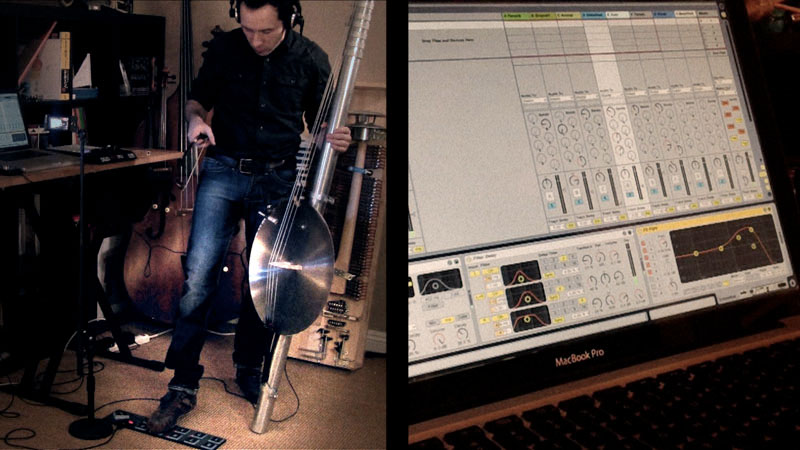
  • On the right you can see the screenshot of Ableton Live, the DAW I used to perform "Dustland".
    The parameters of the sound processors were connected to the keys of pedal board.
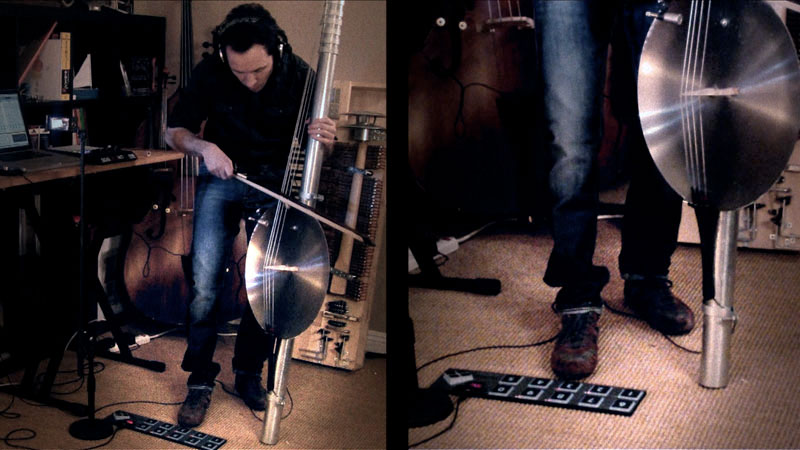
  • On the right you can see the SoftStep pedal board. It's not just a strip of On/Off Keys, also vertical, horizontal and pressure movements are detected, allowing me to control filters and faders during the performance.
  • Since I only needed one microphone I recorded through the Apogee One.
  • The track "Dustland" is available at my Bandcamp page (if you wish to download it for free or name your price).
    It's up also at my
     Soundcloud page.

  • UPDATE 3/10/11

    I thought to post this explanation of the workflow for those of you interested in knowing more about the technical aspect of this project.

    First of all, when it comes to create new sounds I love combining manipulation of acoustic sources with sound processing techniques. Sometimes, the idea for a custom built instrument doesn't stop within its physical form, but it extends to the creation of a unique recording and processing technique that completes its sound, and somehow determines how I will play that instrument.

    In the Live s
    ession, I used the 12 Return tracks as they would be 12 independent sound processors.
    Each one becomes a processing line that shapes the initial sound differently, it can be anything from a simple reverb to complex combination of plugins performing radical sound changes.

    Once everything is setup, moving the Return faders up or down is like exposing or hiding a particular aspect of the sound processing, and since all the plugins are always running and can feed into each other, the sound keeps changing beyond the initial settings. Also, the single plugins inside the chains can be activated independently and their parameters controlled with any MIDI device.


  • This is same principle I used when I set up my sessions in the project I did for DTS with Patrick Leonard:
    DTS Neo:X 11.1 Surround Sound