Since the 1980s, Stuart Williams’ monumental site-specific works have rolled over sweeping expanses of ranch land in California, and have floated on the moats of picturesque chateaux in France. From the Alps to Central Park, and from Los Angeles to Seattle, his head-turning, mesmerizing works have captivated thou… Read More
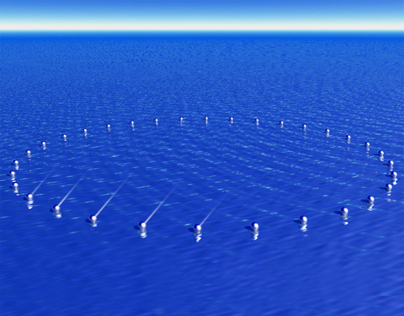
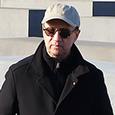
Since the 1980s, Stuart Williams’ monumental site-specific works have rolled over sweeping expanses of ranch land in California, and have floated on the moats of picturesque chateaux in France. From the Alps to Central Park, and from Los Angeles to Seattle, his head-turning, mesmerizing works have captivated thousands.
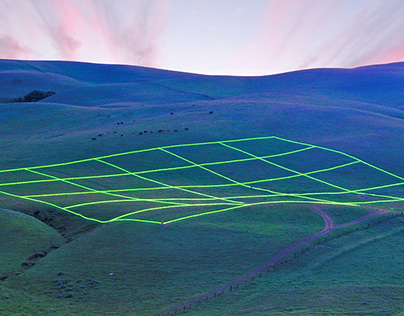
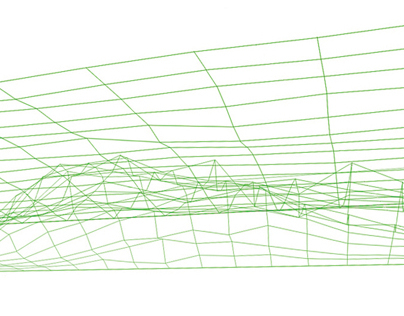
His most ambitious installation, “Luminous Earth Grid,” was realized within view of a major freeway in the rolling hills north of San Francisco. “It’s like a computer generated image come to life,” said the artist, who spent five years raising nearly $500,000 to realize the massive project. Cosponsored by the New York Foundation for the Arts, and Intersection for the Arts in San Francisco, it was a vast array of 1,680 four foot, energy-efficient fluorescent lamps, which swept over an expanse equal to 8 football fields. Said Williams, “The glowing green grid can be seen as an icon of computer imaging technology, which in this ‘real life’ incarnation, gently melds with the flowing shape of a lovely landscape... a dream-like vision of symbiotic unity.”
The project drew international critical acclaim. Peter Selz, former curator at MoMA in New York and founding father of the UC / Berkeley Art Museum, said “It emanates a sense of the romantic sublime with its aura of surprise and wonder. It is a very, very beautiful thing. I think people are very lucky to have a chance to see such a fine work of art.”
Williams holds a degree in architecture from the University of Michigan. Soon after graduation, his interests gravitated decidedly to fine art, and more definitively to site-specific art. His education, with its blend of architecture, art, engineering and urban planning, provided him with an intimate understanding of historical context, scale, and three dimensional space. It also gave him a firm grasp on the importance of relating to the unique aspects of a specific site and locale. All of these factors helped to propel him into the realm of large-scale environmental art, with a focus on both urban and rural locations.
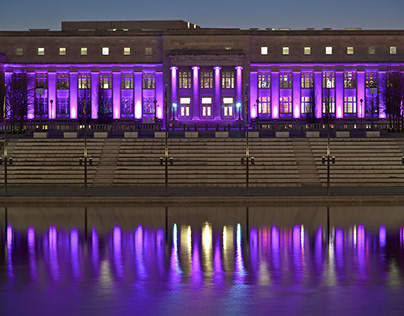
Currently, and under the sponsorship of the New York Foundation for the Arts, Williams is working on a dual-city light installation for Paris and New York, which will link the two cities in a shared public art experience.
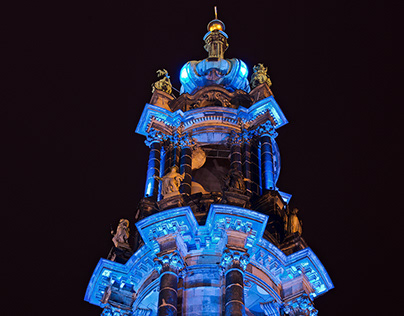
Another installation, also being sponsored by the New York Foundation for the Arts, is now in planning for the Dresden Cathedral, which was built in 1738 and is one of Dresden's foremost landmarks. Waves of light, rising and falling at the pace of human breath, will transform the facade, making it appear to be slowly breathing. Says the artist, “Given Dresden's nearly total destruction in the closing days of World War II, I think the vision of one of this historic city's most important landmarks appearing to be breathing will be extremely moving.”
The artist has been the recipient of grants from a wide variety of organizations, among them, the U.S. Embassy in Berlin; The City of Dresden, Germany; Pacific Gas & Electric, San Francisco; The LEF Foundation, St. Helena, CA; The Rene and Veronica di Rosa Foundation, Napa, CA; and the Osram Sylvania Corporation. Williams has been an invited lecturer at numerous venues including the San Francisco Museum of Modern Art, the San Francisco Art Institute, and the University of California, Davis. He lives and works in New York City. Read Less