Blooming In The Wind
Zaabeel Park, Dubaï, UAE, 2009
Zaabeel Park, Dubaï, UAE, 2009
This tower mixes various references tothe history and culture of the city of Dubaï with a strong concern for sustainability into a coherent structure that owes as much to history andtradition than to the newest technologies.
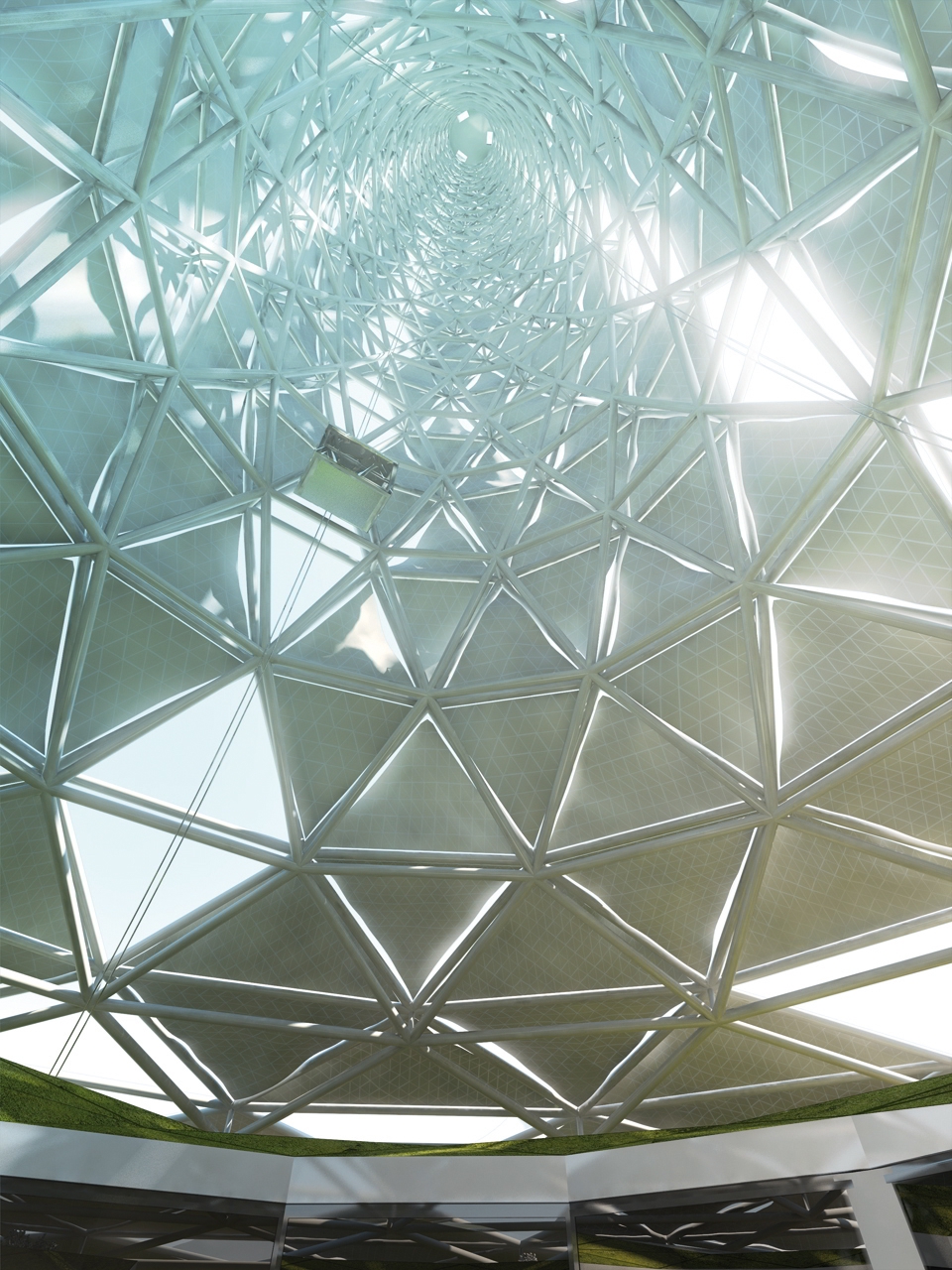
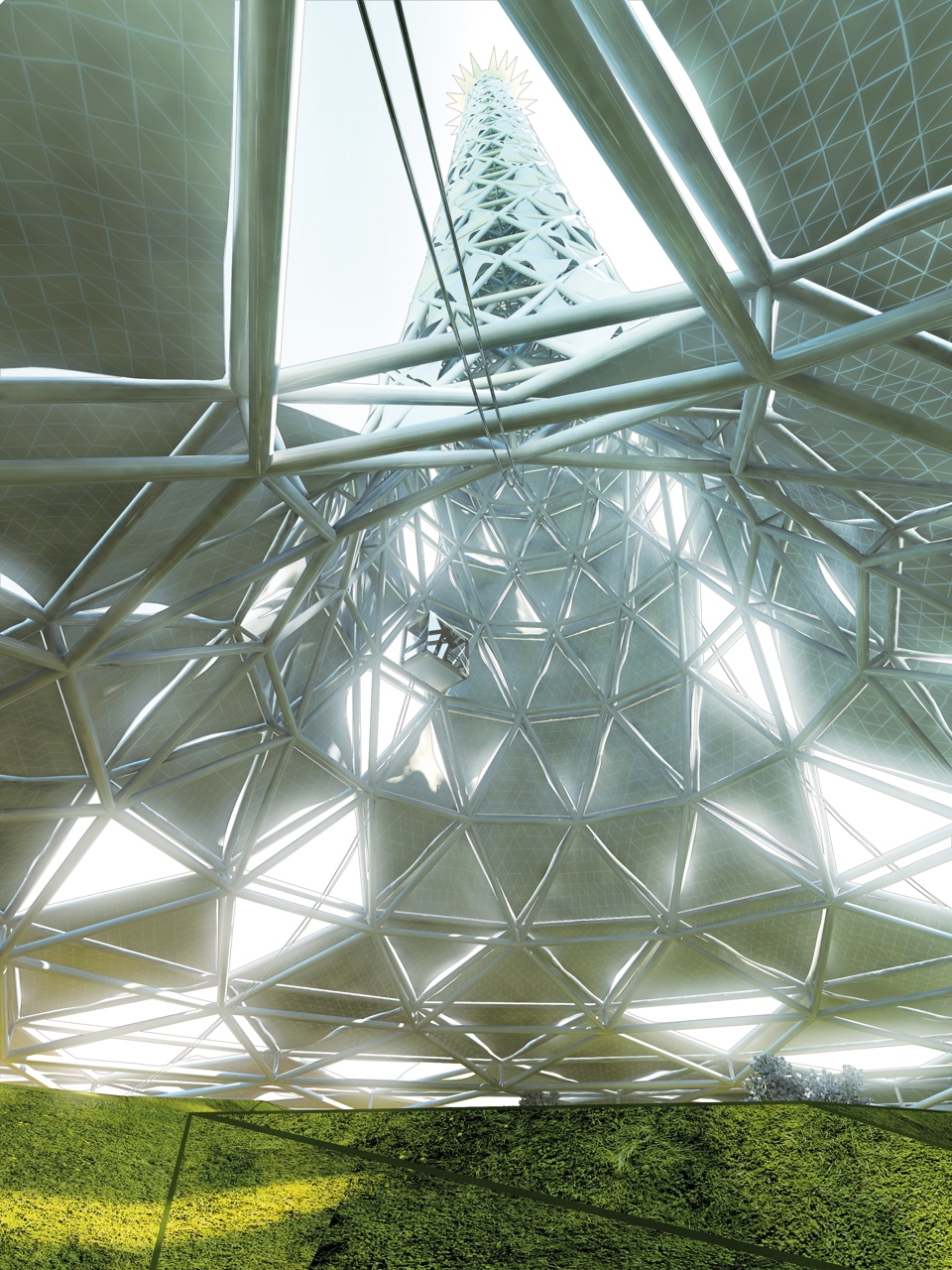
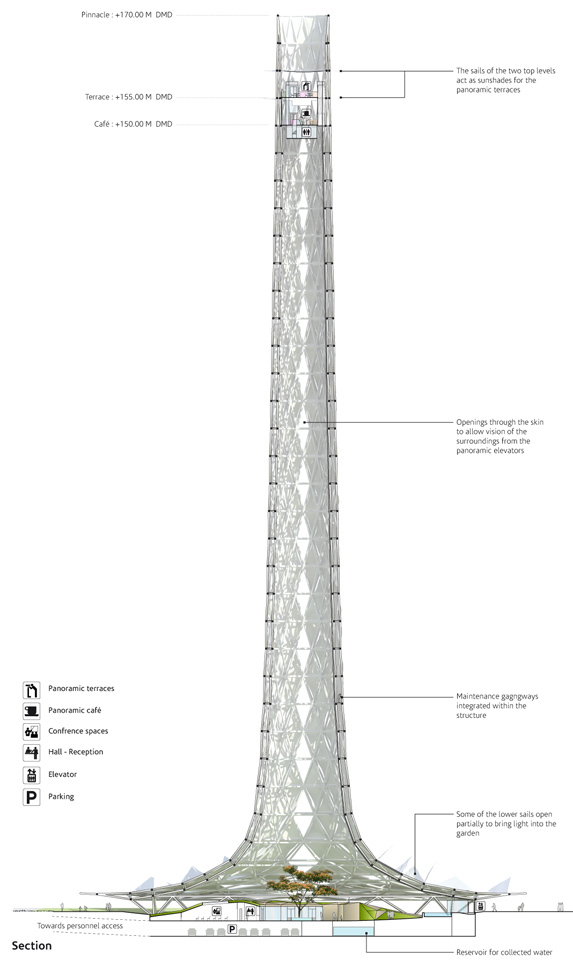
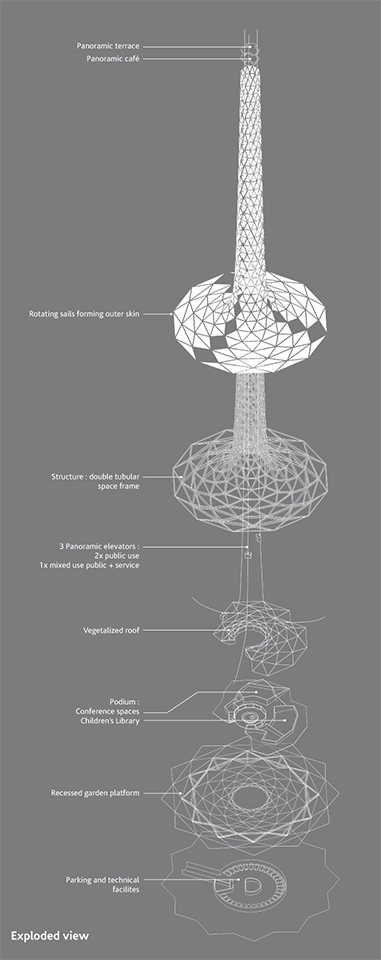
The tower is made of a light structuralmetallic frame on which are attached hundreds of articulated sails that canfreely blow in the wind, or can be set. It gently sits on a circular, slightlyrecessed garden from which emerges a grass-covered podium containing the children’slibrary and the conference spaces.
The shape of the tower expresses a deepanchorage in Dubaï’s culture and history, and an affirmation of the momentum towardsthe future.
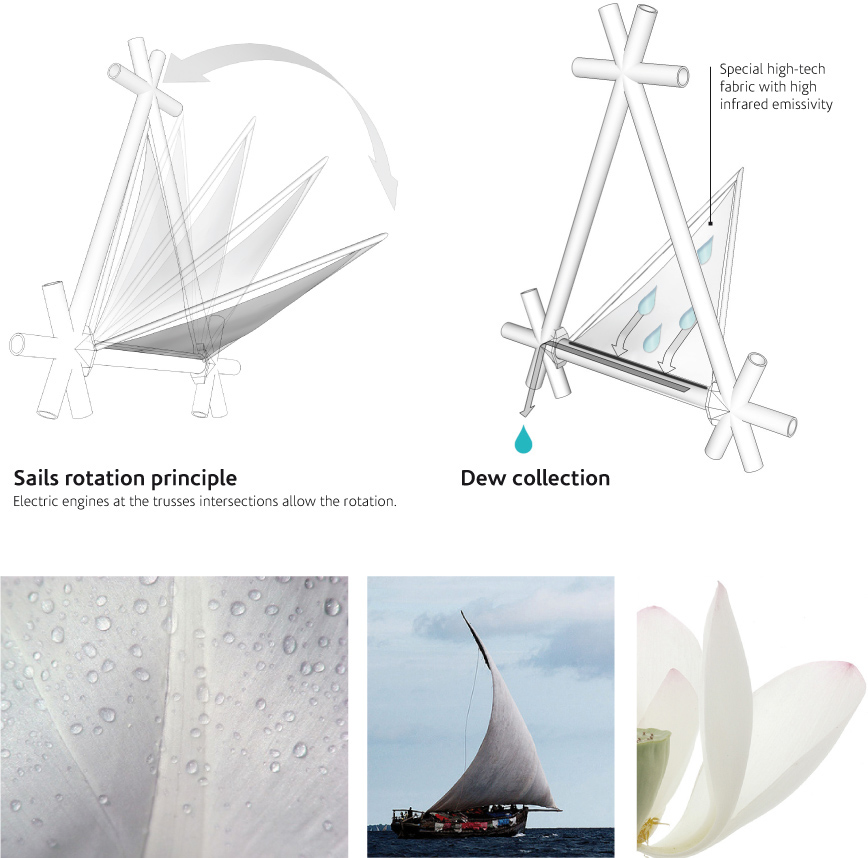
The sails forming the shell give thetower an ever-changing and vibrating silhouette that reflects the quick-pacedchange of the city surrounding it. During the day, these sails serve asefficient sunshades. At dusk they slowly open up, like night flowers blooming,to collect dew from the air during the night.
At dawn, when the first rays of the sunappear again, the sails retract back to their closed position. The watercollected will serve for the daily usage of the tower and its visitors. A newcycle starts over.
The vibration of the sails also servesas a source of natural energy through the piezo-electric effect.
Thus, like a living organism, the towerfollows the alternating cycles of nature and draws its resources from it.
The synthesis of all these elements stronglyresonates with various aspects of Dubaï’s culture. The sails are a clearreference to the city’s strong bounds to the sea. Their shape and color arereminiscence of the boutre’s sails, desert tents, etc. The way water and energyare collected are applications of green building. But they also remind us thatDubaï always drew its wealth from nature (pearls from the sea then oil from theground).
These concept and ideas are materializedin a simple, elegant yet very distinctive and unique shape, making it an iconiclandmark that epitomises Dubaï’s pride of his past and its faith in the future.
The tower is made of a light structuralmetallic frame on which are attached hundreds of articulated sails that canfreely blow in the wind, or can be set. It gently sits on a circular, slightlyrecessed garden from which emerges a grass-covered podium containing the children’slibrary and the conference spaces.
The shape of the tower expresses a deepanchorage in Dubaï’s culture and history, and an affirmation of the momentum towardsthe future.
The sails forming the shell give thetower an ever-changing and vibrating silhouette that reflects the quick-pacedchange of the city surrounding it. During the day, these sails serve asefficient sunshades. At dusk they slowly open up, like night flowers blooming,to collect dew from the air during the night.
At dawn, when the first rays of the sunappear again, the sails retract back to their closed position. The watercollected will serve for the daily usage of the tower and its visitors. A newcycle starts over.
The vibration of the sails also servesas a source of natural energy through the piezo-electric effect.
Thus, like a living organism, the towerfollows the alternating cycles of nature and draws its resources from it.
The synthesis of all these elements stronglyresonates with various aspects of Dubaï’s culture. The sails are a clearreference to the city’s strong bounds to the sea. Their shape and color arereminiscence of the boutre’s sails, desert tents, etc. The way water and energyare collected are applications of green building. But they also remind us thatDubaï always drew its wealth from nature (pearls from the sea then oil from theground).
These concept and ideas are materializedin a simple, elegant yet very distinctive and unique shape, making it an iconiclandmark that epitomises Dubaï’s pride of his past and its faith in the future.